
How Much Does Suspension Repair Cost?
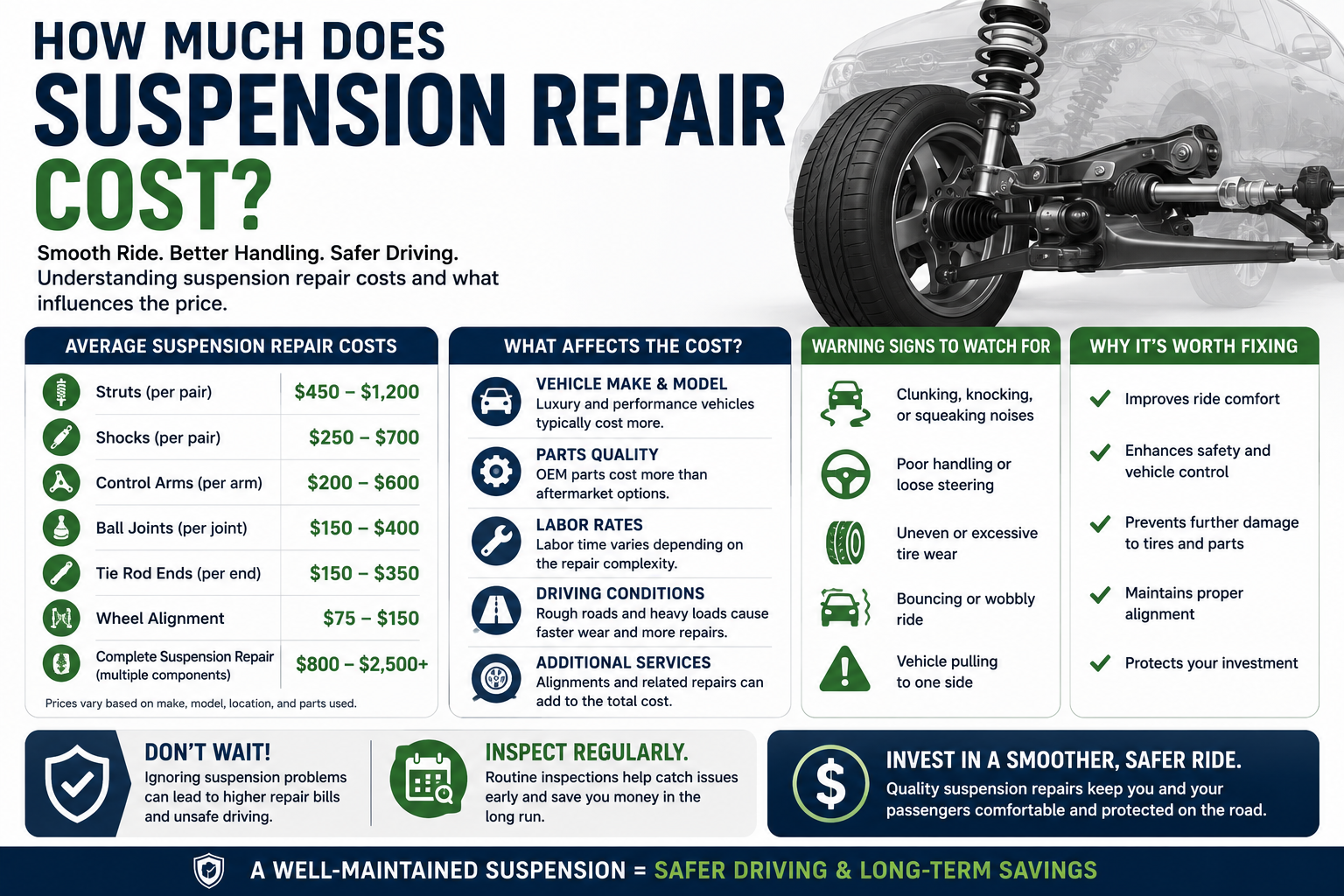
Most suspension repairs cost between $150 and $2,500+, depending on which components have failed and whether the problem has already affected tires, steering components, or wheel alignment.
The reason suspension repair estimates vary so much is that “suspension repair” can mean anything from replacing a sway bar link to rebuilding much of the front suspension.
Typical Suspension Repair Costs
| Repair | Typical Cost Range |
| Sway Bar Links | $150 – $400 |
| Wheel Alignment | $100 – $250 |
| Tie Rod Replacement | $250 – $800 |
| Ball Joint Replacement | $300 – $1,000 |
| Control Arm Replacement | $400 – $1,500 |
| Shock Replacement | $300 – $1,200 |
| Strut Replacement | $600 – $2,000+ |
| Complete Front Suspension Repair | $1,500 – $4,000+ |
The actual cost depends on the vehicle, labor requirements, part quality, and whether additional damage has occurred.
Why One Driver Pays $400 and Another Pays $2,000
Two vehicles arrive with the same complaint:
“The steering feels loose and the vehicle wanders.”
The first vehicle has a worn tie rod caught during a routine inspection.
The second vehicle has been driven for another year with the same problem.
Now the repair includes:
- Tie rods
- New tires
- Wheel alignment
- Additional suspension components
The original problem was similar.
The final repair bill isn’t.
That’s why suspension issues are often less expensive when they’re diagnosed early.
The Most Common Suspension Repairs We See
Shocks and Struts
Shocks and struts are wear items.
Most drivers expect bad shocks to create dramatic bouncing, but that’s usually not how the problem starts.
More often, drivers notice:
- Increased body roll
- Rougher ride quality
- Front-end dive while braking
- Less confidence at highway speeds
A Common Shop Observation
Many customers don’t realize how worn their suspension is because the change happened gradually.
We’ve had customers pick up their vehicle after new struts and immediately comment:
“I forgot this thing used to drive like this.”
The deterioration often happens slowly enough that drivers adapt to it.
Typical Cost
| Repair | Typical Cost |
| Single Shock Replacement | $300 – $700 |
| Pair of Shocks | $600 – $1,200 |
| Complete Strut Assembly | $600 – $2,000+ |
Ball Joints
Ball joints connect suspension components while allowing movement during steering and suspension travel.
When they wear, the vehicle may:
- Wander
- Pull
- Clunk over bumps
- Wear tires unevenly
Typical Cost
| Repair | Typical Cost |
| Ball Joint Replacement | $300 – $1,000 |
Tie Rods
Tie rods are steering components, but they’re commonly included in suspension repairs because the systems work together.
Common symptoms include:
- Loose steering
- Vehicle drift
- Uneven tire wear
- Off-center steering wheel
Typical Cost
| Repair | Typical Cost |
| Inner or Outer Tie Rod | $250 – $800 |
Control Arms
Control arms help maintain wheel position and alignment.
Many modern vehicles require complete control arm replacement when bushings wear out.
Typical Cost
| Repair | Typical Cost |
| Control Arm Replacement | $400 – $1,500 |
Suspension Problems Often Become Tire Problems
This is where repair costs climb.
A worn suspension component doesn’t just affect ride quality.
It changes how the tire contacts the road.
Real Example
A driver installs four new tires.
Six months later the tires are already wearing unevenly.
The problem isn’t the tires.
The problem is the worn suspension component that wasn’t repaired.
We’ve seen drivers lose hundreds of dollars worth of tire life because the actual cause of the wear was never addressed.
That’s why suspension inspections frequently include tire inspections and alignment checks.
Why Suspension Repairs Usually Include Wheel Alignment
After replacing:
- Tie rods
- Ball joints
- Control arms
- Struts
an alignment is often necessary.
Without alignment correction, new suspension parts can still leave the vehicle:
- Pulling
- Wandering
- Wearing tires unevenly
Typical Alignment Cost
| Service | Typical Cost |
| Four-Wheel Alignment | $100 – $250 |
Skipping the alignment is often one of the most expensive ways to save money.
Can Suspension Problems Affect Braking?
Absolutely.
Most drivers think suspension and brakes are separate systems.
They’re not.
When suspension components wear out, the vehicle’s weight transfers differently during braking.
This can create:
- Longer stopping distances
- Front-end dive
- Reduced stability
- Uneven tire loading
Something We See Regularly
Customers sometimes schedule brake inspections because the vehicle feels unstable while stopping.
After inspection, the brakes may be fine.
The actual issue is suspension wear affecting how the vehicle behaves under braking.
When Should You Schedule an Inspection?
Don’t wait for a part to completely fail.
Schedule a suspension inspection if you notice:
- Excessive bouncing
- Loose steering
- Pulling while driving
- Uneven tire wear
- Clunking noises
- Vibration
- Rough ride quality
The earlier a suspension problem is identified, the more likely it is to remain a single-component repair.
The Cost of Suspension Repair Depends More on Timing Than the Part
Suspension repairs can be relatively minor.
They can also become expensive.
The difference is often how long the problem has been present.
A worn tie rod caught during a routine inspection is usually a straightforward repair.
That same tie rod after months of abnormal tire wear, alignment issues, and additional suspension stress becomes a much larger project.
If your vehicle doesn’t feel as stable, comfortable, or predictable as it once did, a suspension inspection is usually far less expensive than replacing the tires and components that wear out when the problem is ignored.